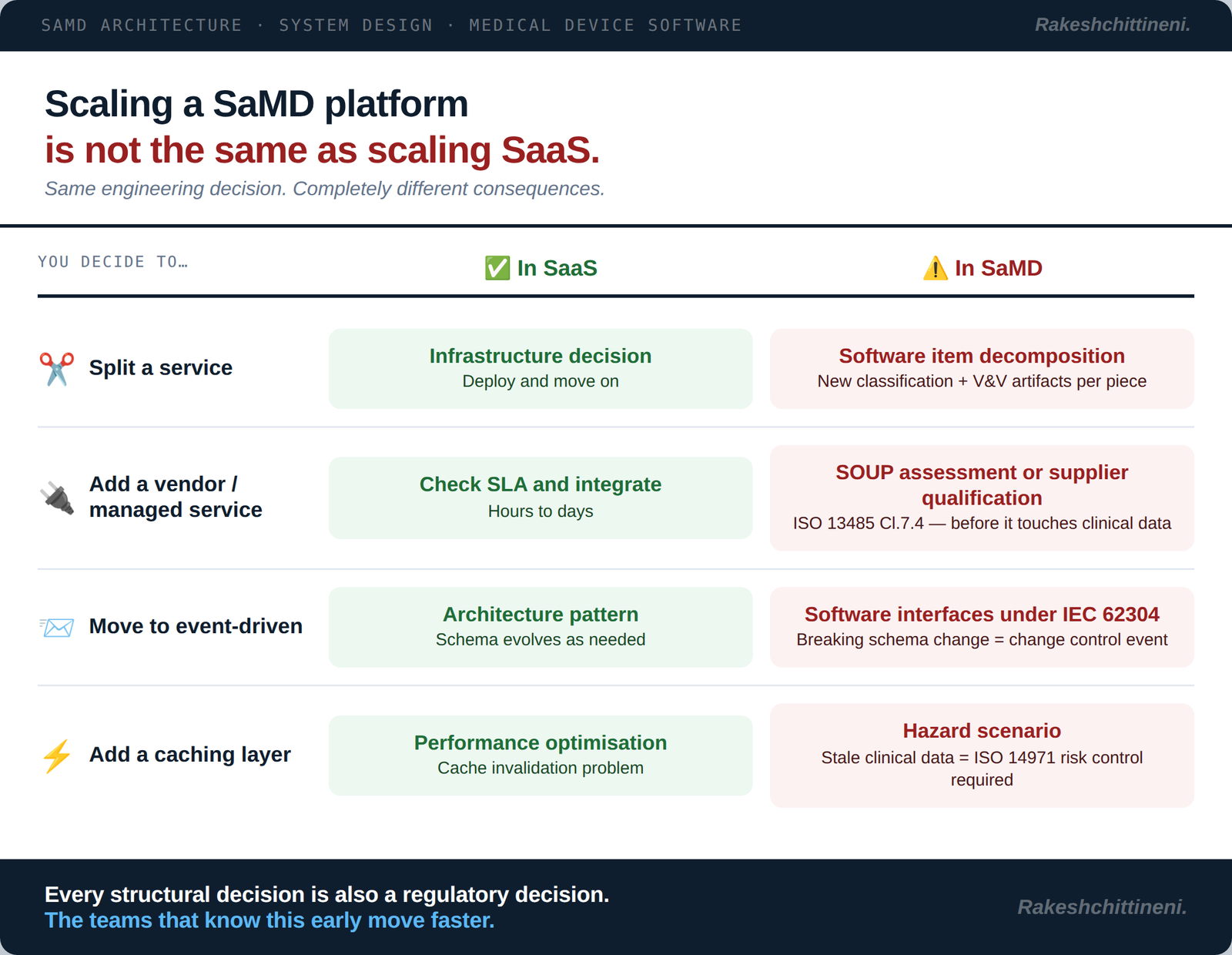
Modernization in a medical device platform is not just a technical strategy. Every module you replace is a change control event under IEC 62304.
The incremental migration, in four phases
- Map boundaries. Map software item boundaries and safety classifications in the legacy system.
- Build the facade. A routing layer between old and new. It is a software item, not infrastructure.
- Replace incrementally. Each replacement is a change control event: new V&V, updated RMF.
- Retire legacy. All traffic shifted, and the DHF updated to reflect the final architecture.
What changes versus a standard migration
- Every module swap is a change control event. A new item, a new classification, new V&V, and the DHF updated before deployment.
- The facade layer is a software item. It needs classification, V&V evidence and a place in the Software Architecture Description.
- The RMF evolves with every phase. New modules mean new SOUP and new failure modes. The RMF is a living document, not a submission snapshot.
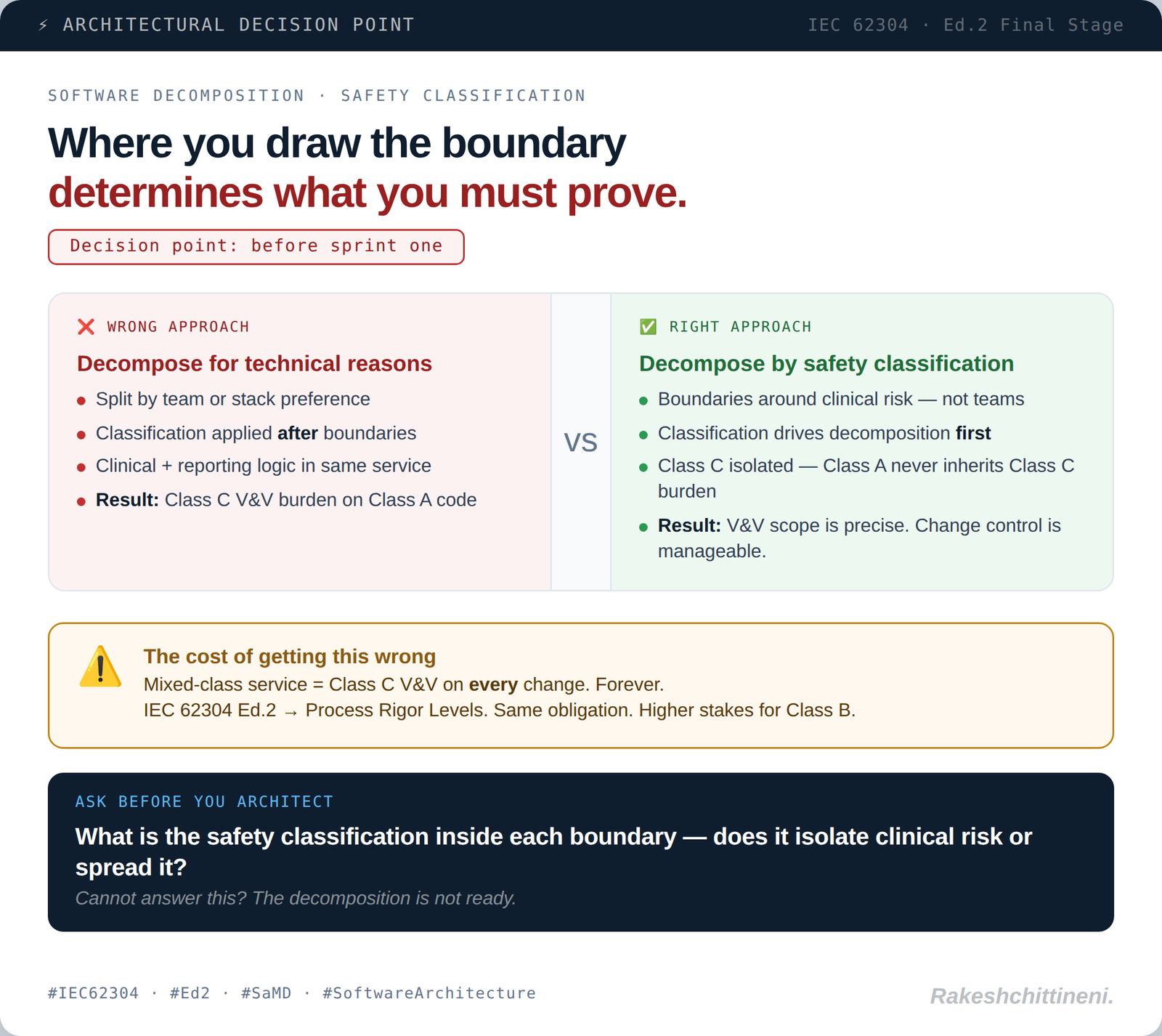
- Monoliths make this expensive. No clean boundaries means impact analysis across the entire system on every change. The Strangler Fig works cleanly when software items are isolated, and becomes a DHF nightmare when you are extracting boundaries from a system never designed to have them.
Intentional modernization is a prerequisite, not a parallel activity. The boundaries you define before you start are the boundaries you manage in your DHF for the life of the product.
Seen this differently?
Questions, corrections and counterexamples are welcome.