Good UX and regulatory usability engineering are not the same. One makes the interface intuitive. The other proves it is safe.
What IEC 62366 requires from architects
- Use errors are hazardous situations. A clinician selecting the wrong dose because of an ambiguous interface is a use error, a hazardous situation under ISO 14971. It has to be identified, risk-assessed and mitigated before development ends.
- Critical tasks must be defined and validated. Every task that could cause serious harm if done incorrectly must be tested with representative users. That is summative validation, not UAT, and the difference matters to FDA reviewers.
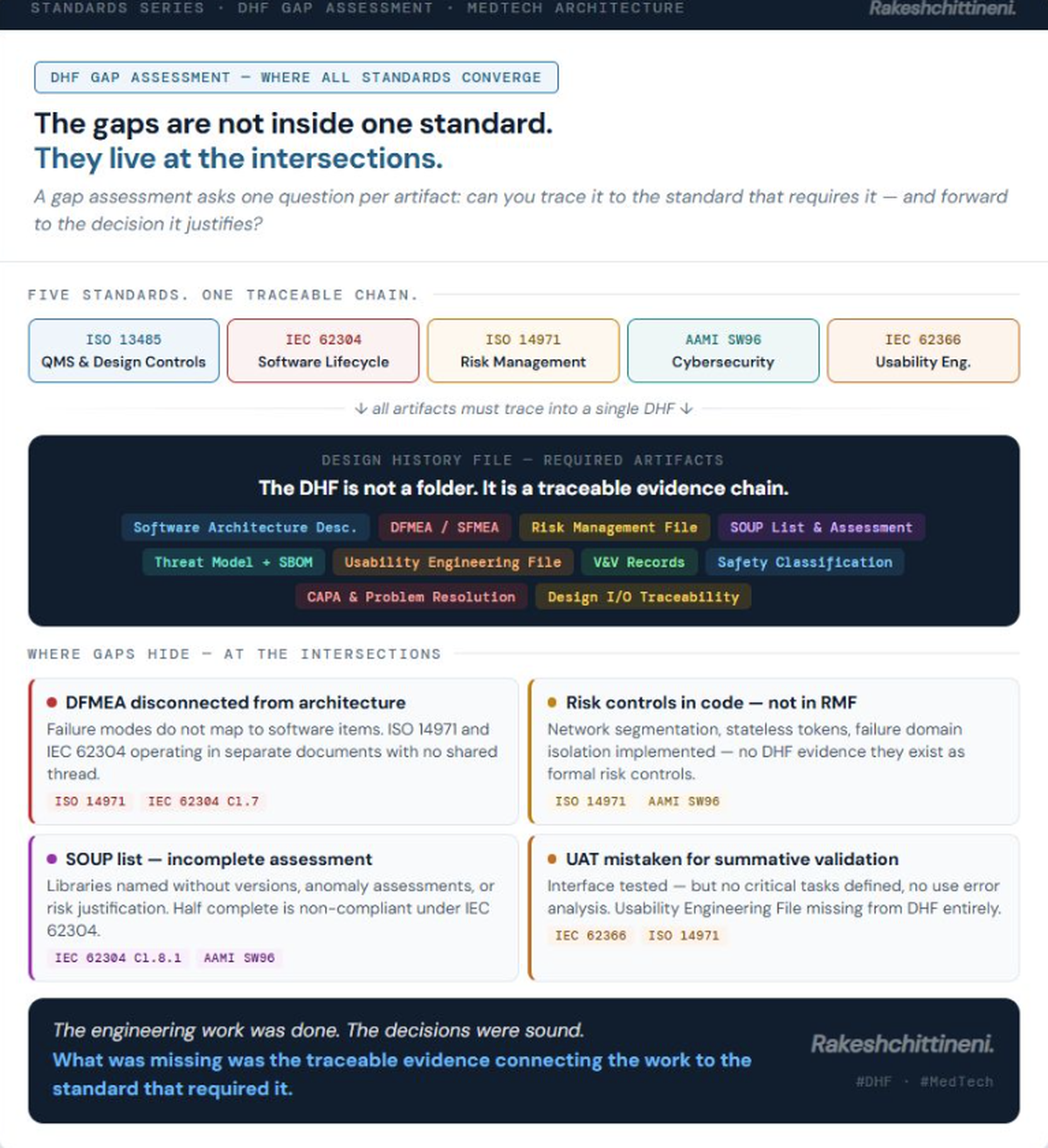
- The Usability Engineering File belongs in the DHF. Use specification, use error analysis, formative records and summative validation evidence. If it isn't in the DHF, it doesn't exist.
- Graceful degradation is a usability requirement. Keeping core clinical information visible during a degraded state is more than resilience architecture. If a clinician can't interpret system state during a Dark Day, that is a use error by design.
The process
- Use specification: users, tasks, environments.
- Use error analysis: hazards and risk assessment.
- Formative testing: iterative, during development.
- Summative validation: final safety evidence.
- UEF in the DHF: the regulatory artifact is complete.
Architects who understand IEC 62366 don't hand the interface off to a UX team and move on. They define the safety boundaries and make sure the evidence lands in the DHF.
Seen this differently?
Questions, corrections and counterexamples are welcome.