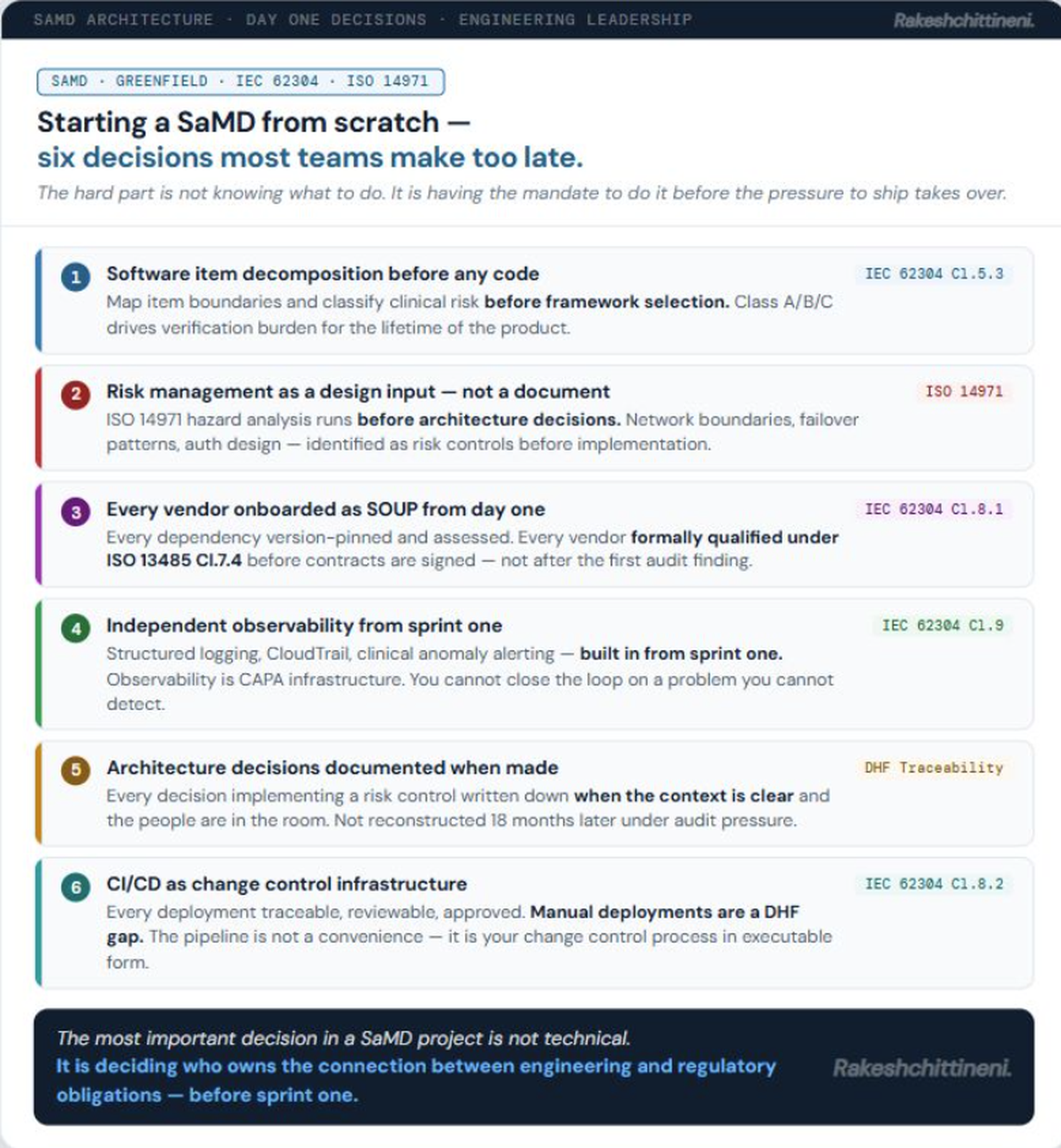
A pipeline is not just how you ship. It is your change control process made executable. In SaMD it is a regulatory requirement. In any critical system it is simply good engineering.
What a well-designed pipeline does
- Build: a versioned artifact.
- Test: evidence is generated as a by-product.
- Change control board gate: a human approval is captured.
- Deploy: the audit trail is recorded.
- Verify: evidence is closed.
Four properties worth designing in
- Every change is traceable: who approved it, what it contained, what it replaced.
- The boundary is enforced structurally. Unapproved changes cannot reach production, because the pipeline does not allow it, not because a rule says so.
- Evidence is generated automatically as a natural output of the engineering process.
- Change types are distinguished. A routine update and a safety-critical patch have different gates and different evidence requirements.
Built for speed versus built for control
- Gates get bypassed, hotfixes go unrecorded, and there is no evidence trail when the incident report arrives.
- Every deployment is an auditable event, human approval is captured, and the evidence exists before anyone asks.
Design your pipeline as change control infrastructure, not as an afterthought when the auditor asks for the trail.
Seen this differently?
Questions, corrections and counterexamples are welcome.