I had a significant blind spot as a healthcare architect.
I could architect complex clinical systems. But mapping those decisions against IEC 62304 or ISO 14971? Gaps.
So I started learning. What I found changed how I approach every MedTech engagement: these standards aren't bureaucratic checkboxes. They are architectural requirements in disguise.
What the core stack looks like, and why architects should care
QMS / SDLC. The foundation. If your development process isn't structured and auditable under ISO 13485, nothing upstream holds up.
ISO 13485 and 14971. Quality and risk management. Isolating failure domains isn't just good architecture, it's how you demonstrate patient harm mitigation.
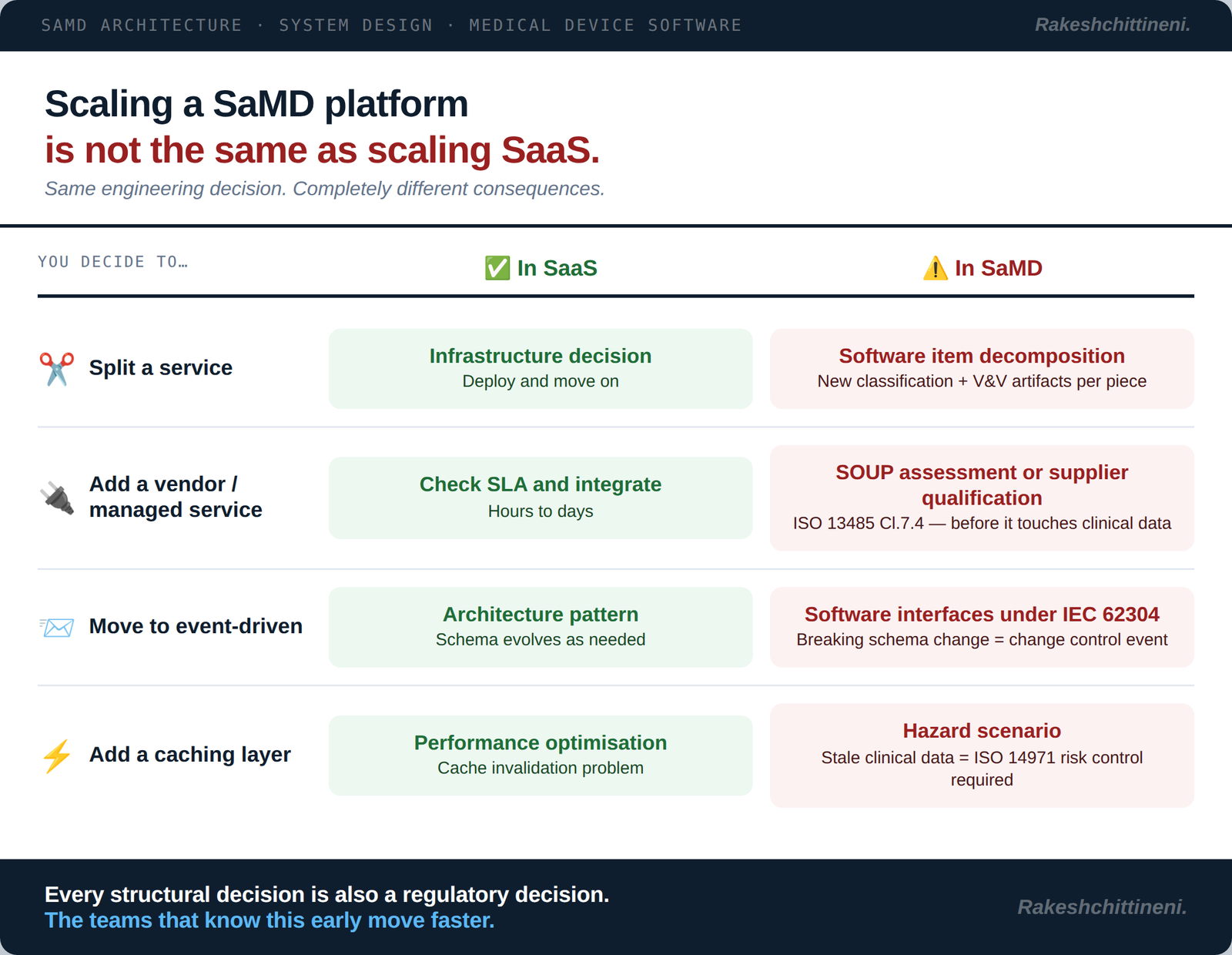
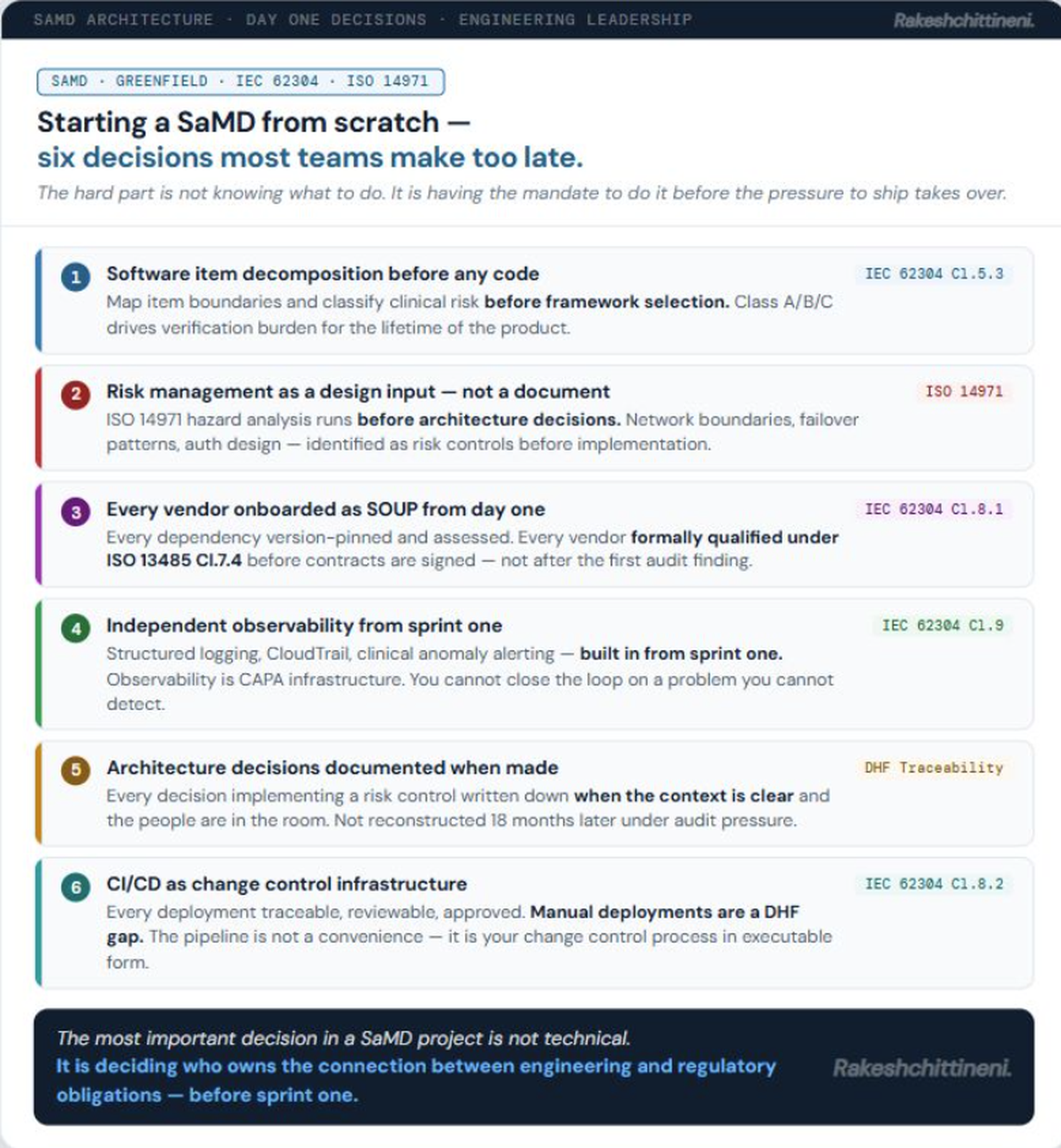
IEC 62304. Software lifecycle. How you decompose systems, classify components by safety risk and manage SOUP are design decisions, not documentation tasks. Edition 2 is expected to replace Class A/B/C with PAL I and PAL II, so if you're building today, this affects your architecture now.
IEC 62366. Usability engineering. The interface between system and clinician is a safety boundary, not a UX concern.
AAMI SW96. Cybersecurity. Stateless tokens, locally validated trust and a hardened edge are regulatory expectations, not optional best practices.
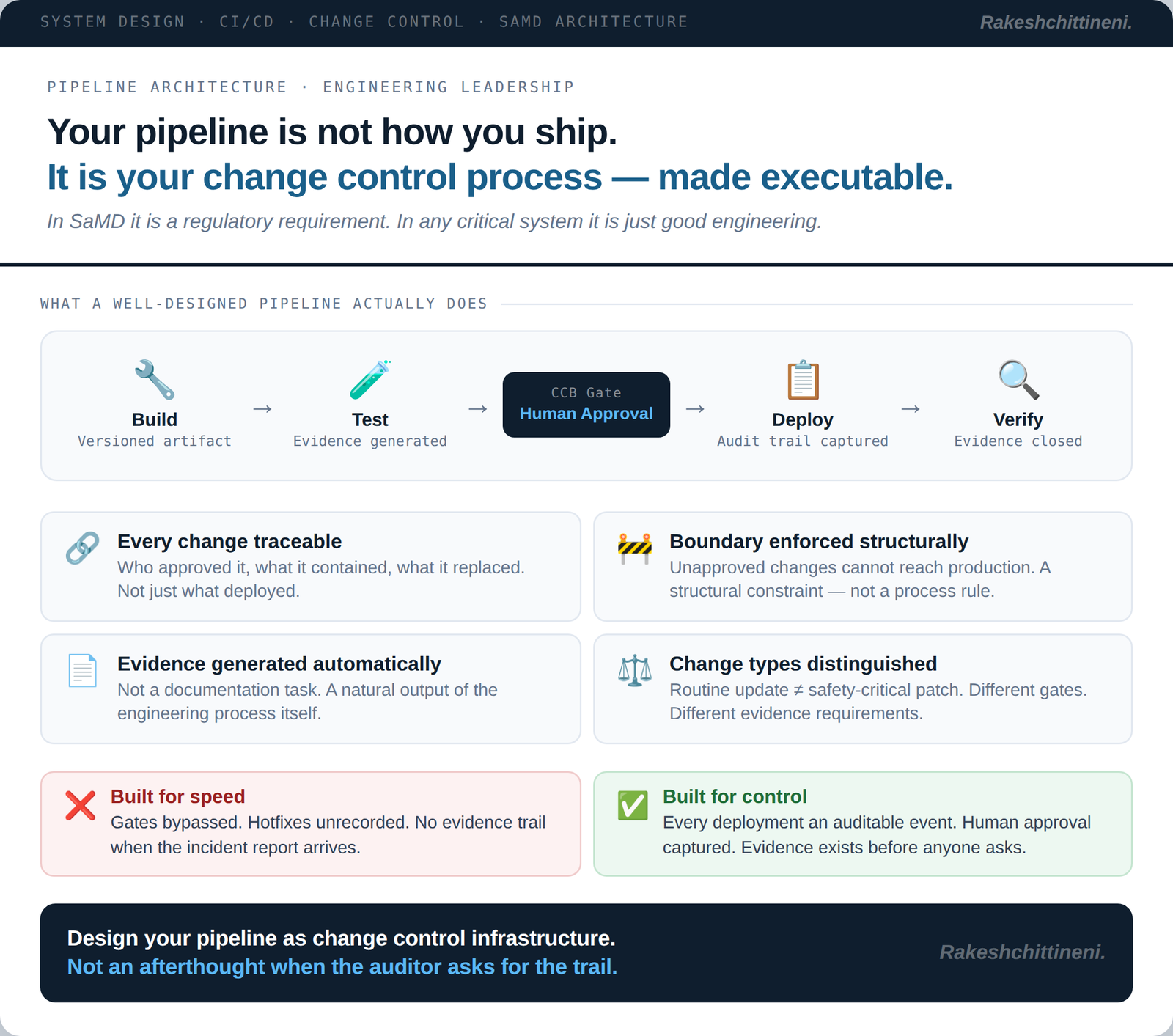
Compliance is not something you retrofit into an architecture.
It is a Day 1 design decision. Design intentionally, and the standards start to feel less like constraints and more like a blueprint.
Seen this differently?
Questions, corrections and counterexamples are welcome.